Having trouble sourcing hospital dietary tray kits?
Medd Max makes the full line of 19: sugar-free, low-sodium and regular condiment kits, tray kits, meal kits and wrapped cutlery. We supply foodservice distributors and the hospitals and nursing homes they serve, so the tray line never runs out again.
- 1Send projections. Which kits, roughly how many cases a month, ship-to state. Two minutes in the form.
- 2We confirm and reserve. Pricing, cross-reference against what you buy today, and a production slot for your volume.
- 3Six weeks to first delivery. After that we hold stock for you and ship from our warehouse on Net 30.
Read the diet at a glance.
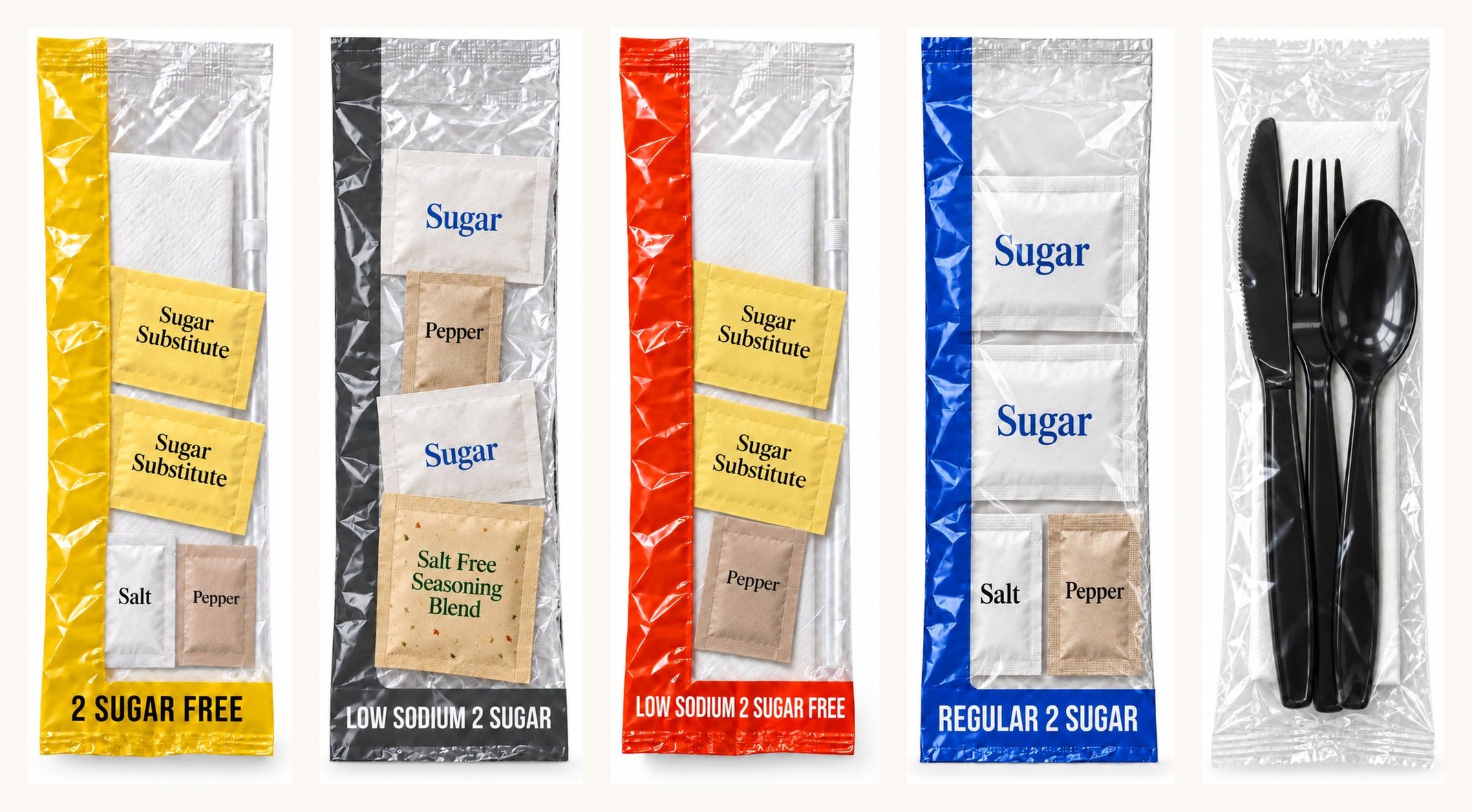
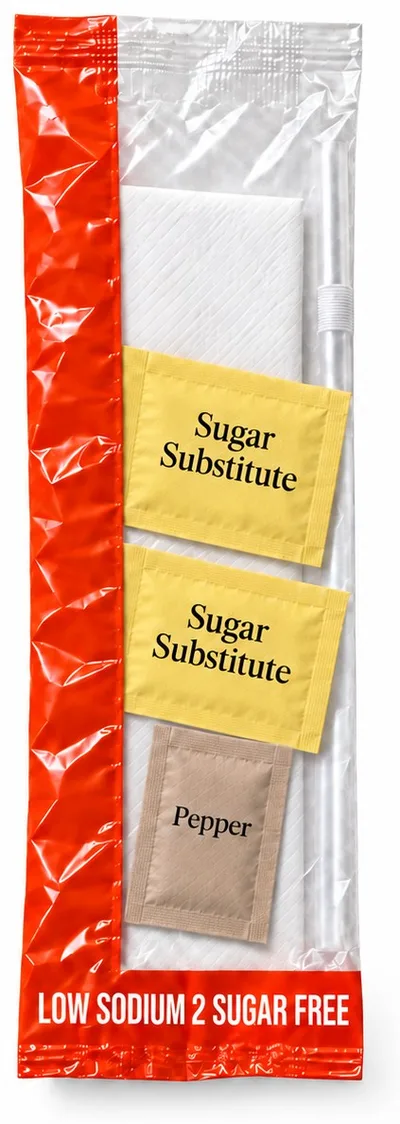
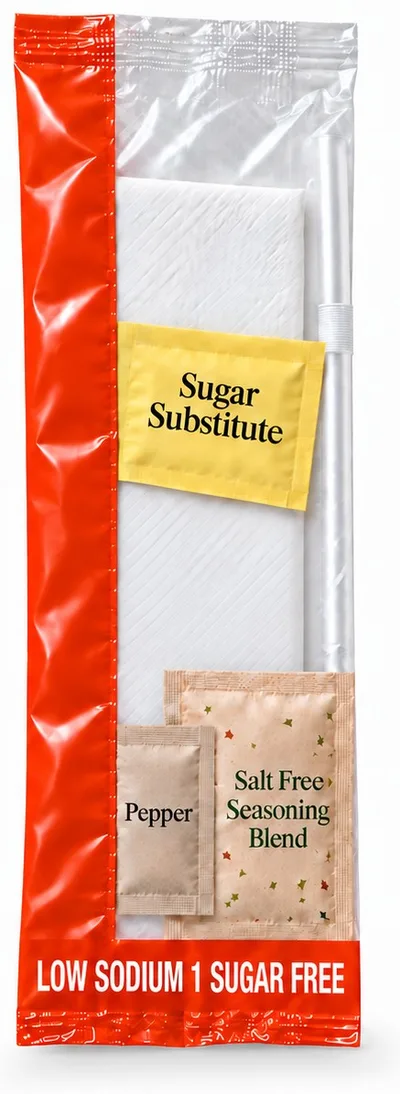
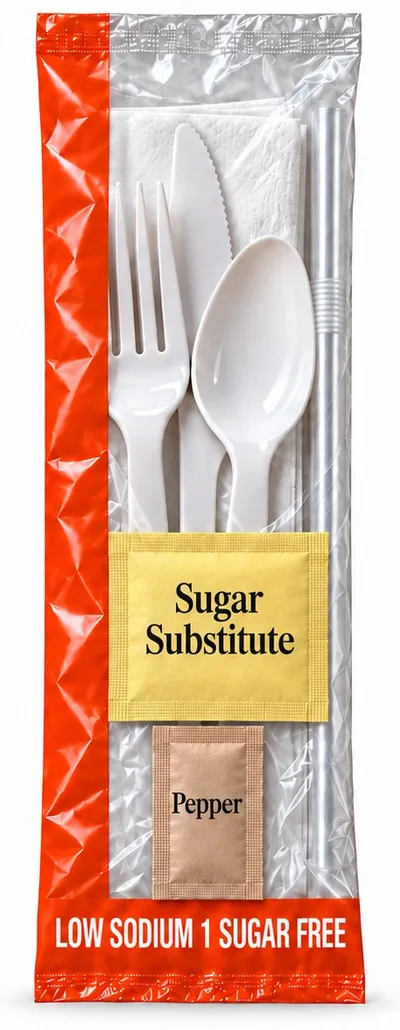
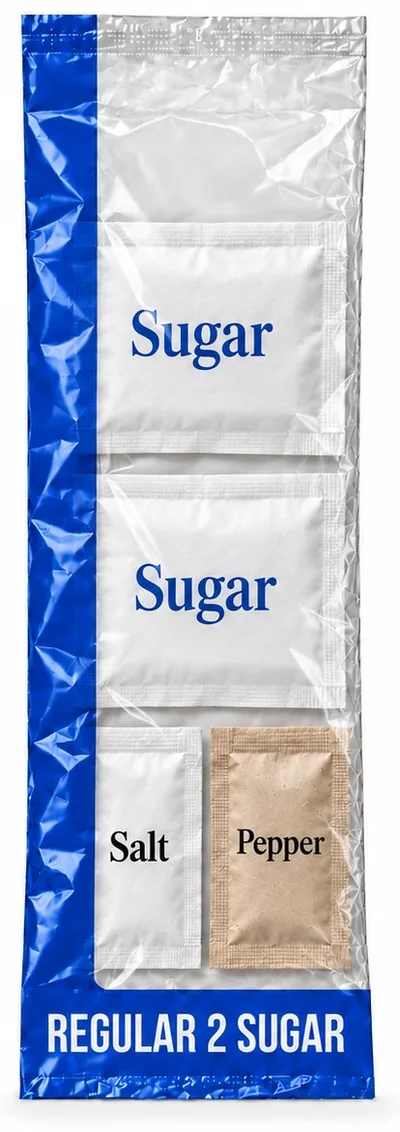
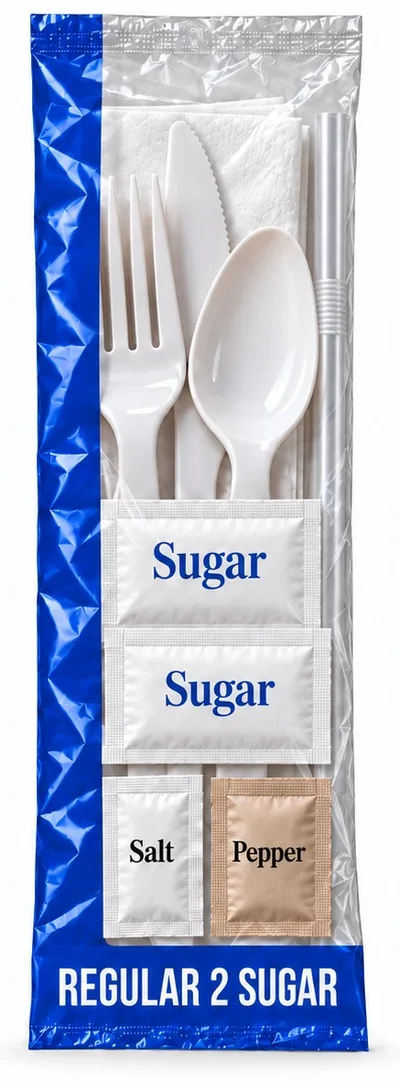
A bold color band and printed diet label on every pouch let tray-line staff, nurses and CNAs confirm the order against the tray card in a second, without opening it.
The 19 kits.
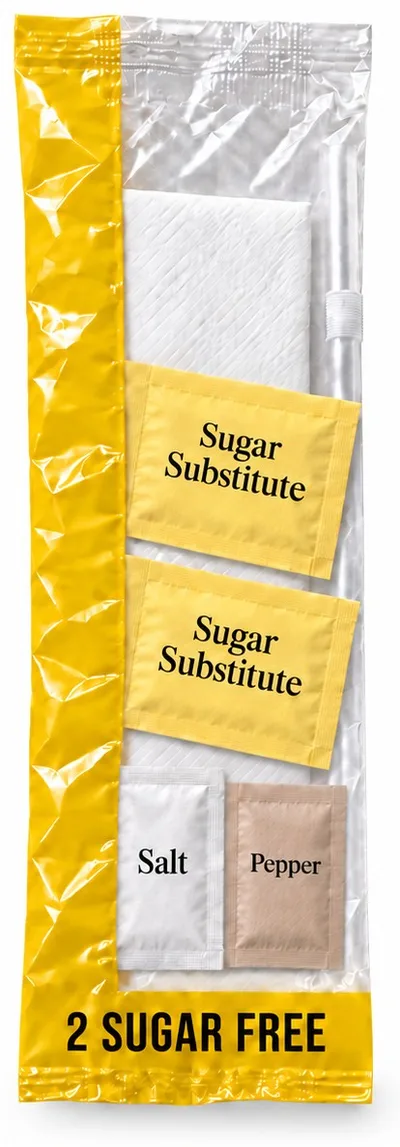
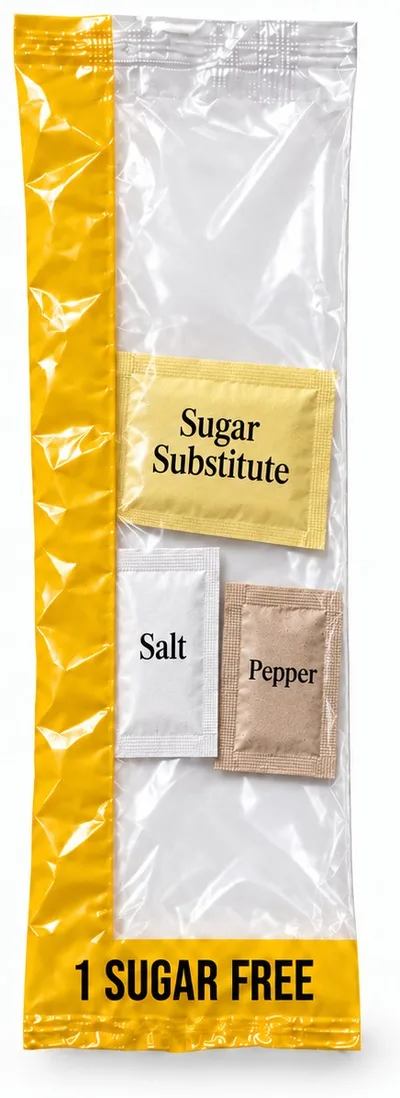
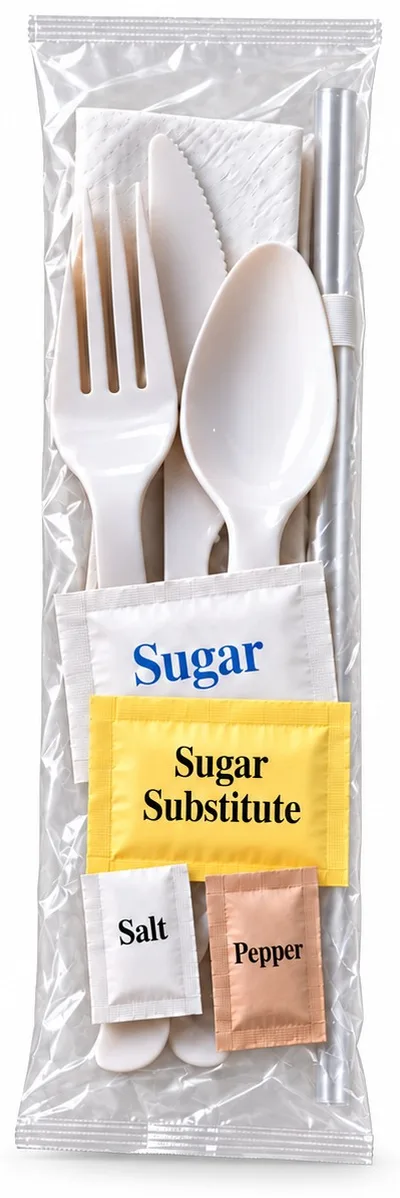
Five condiment-only kits (1,000 per case), three tray kits with straw and napkin, four meal kits with cutlery and seven wrapped cutlery kits (250 per case). Tap any kit for specs and UPC.
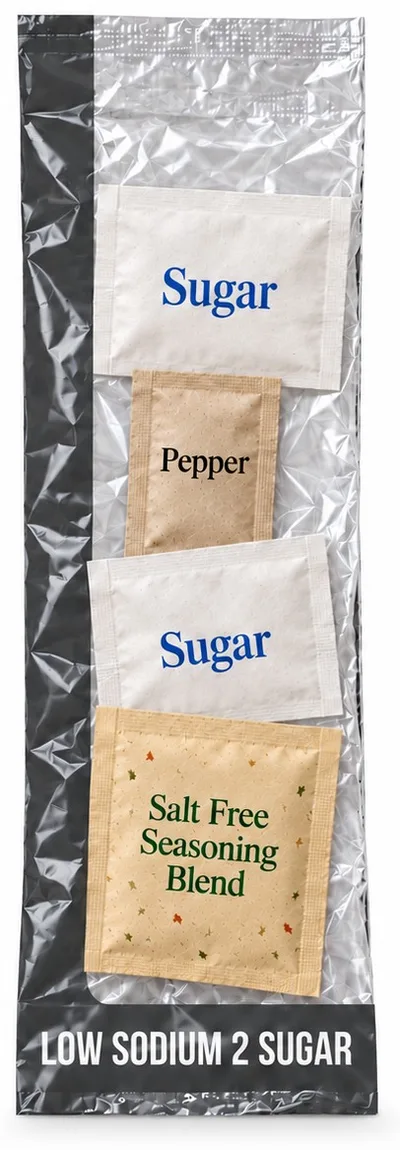
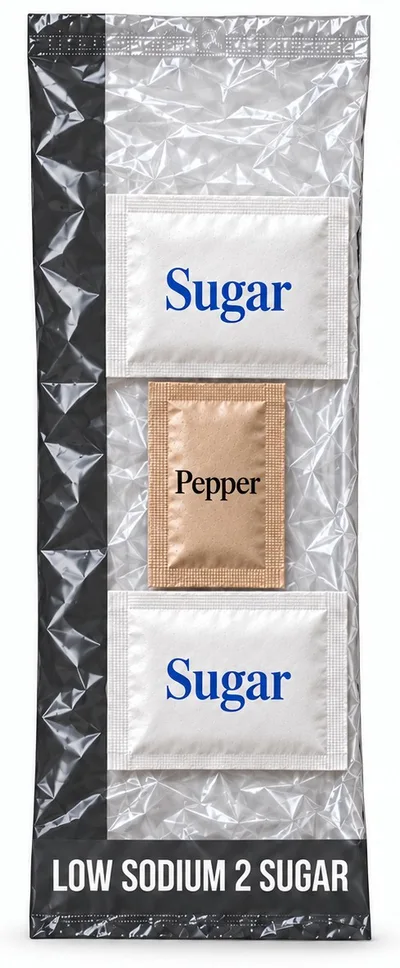
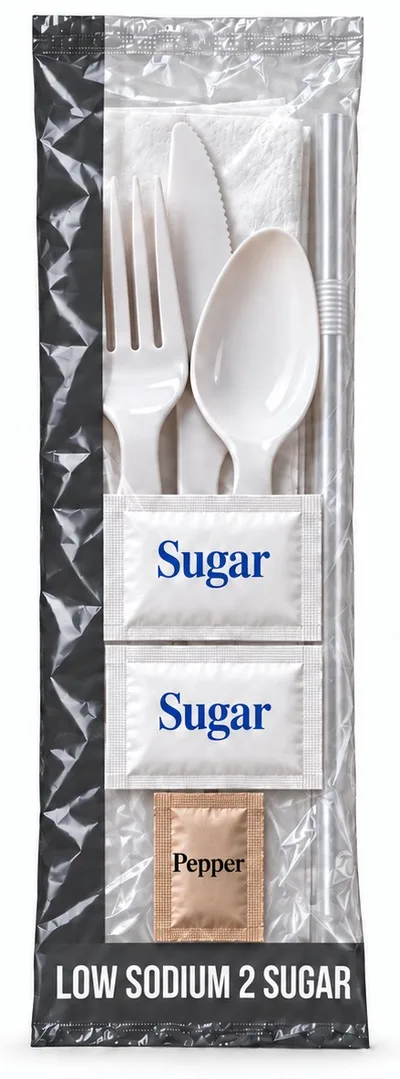
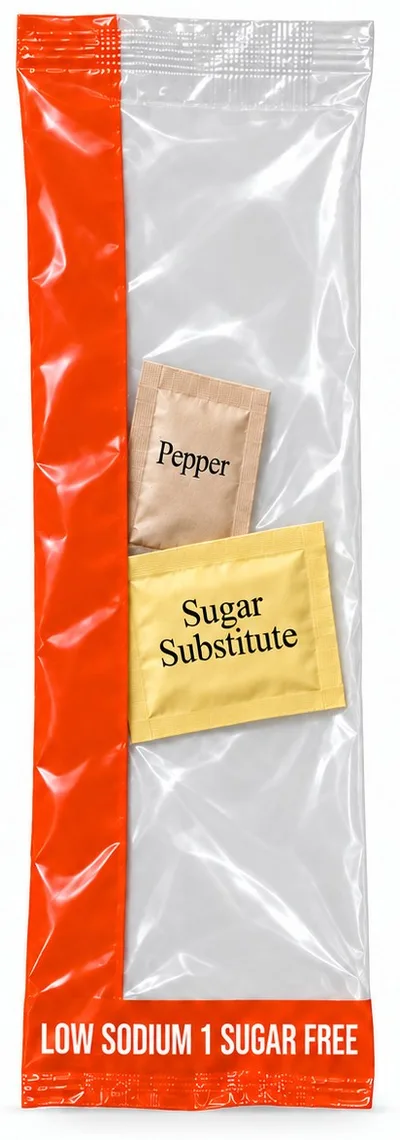
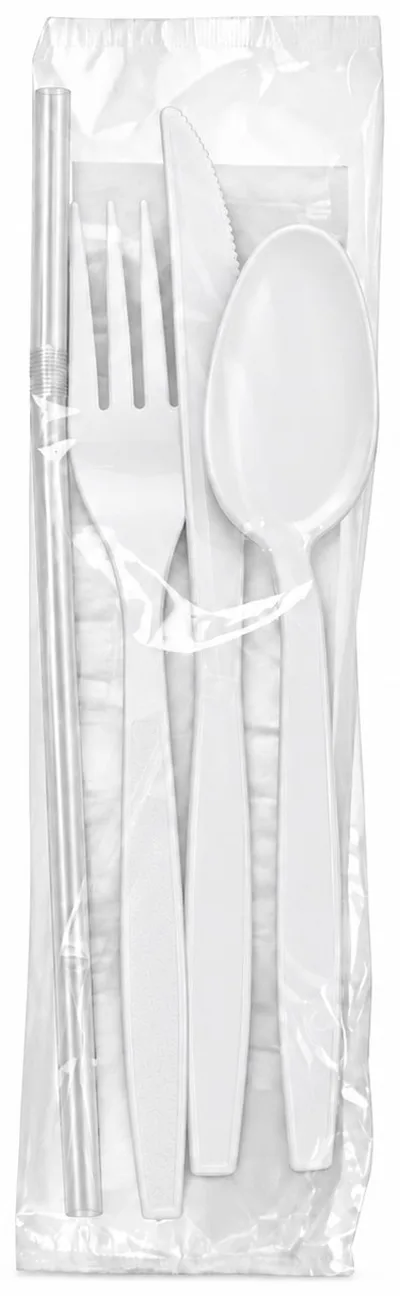
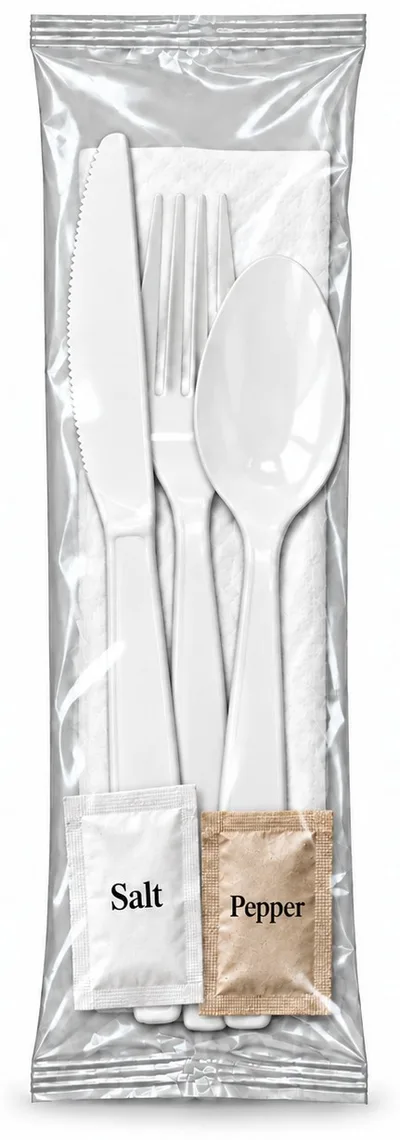
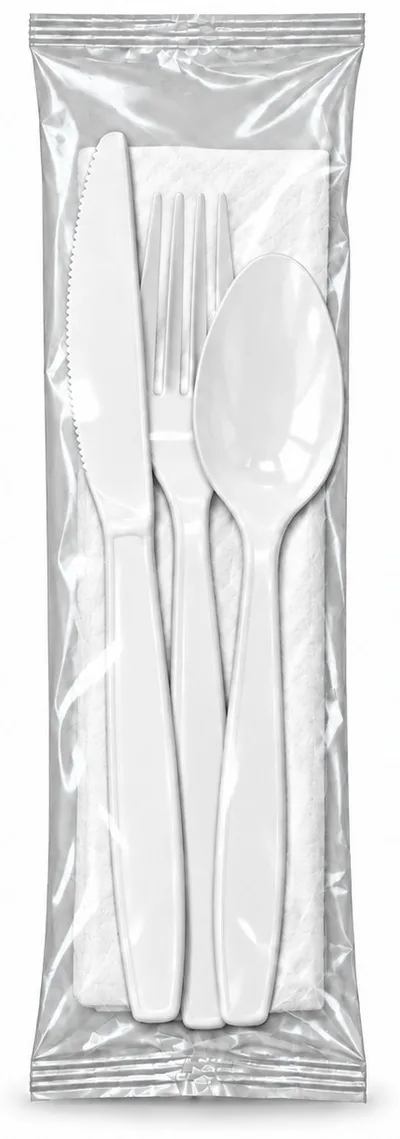
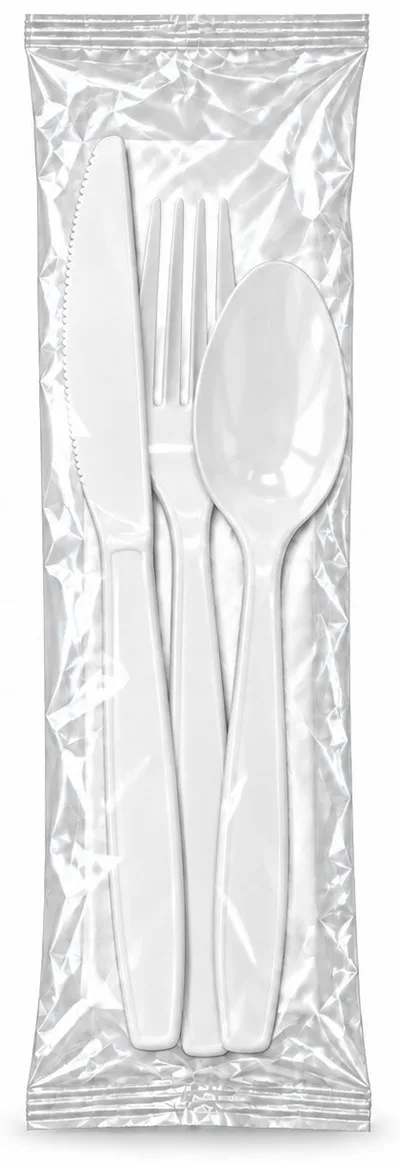
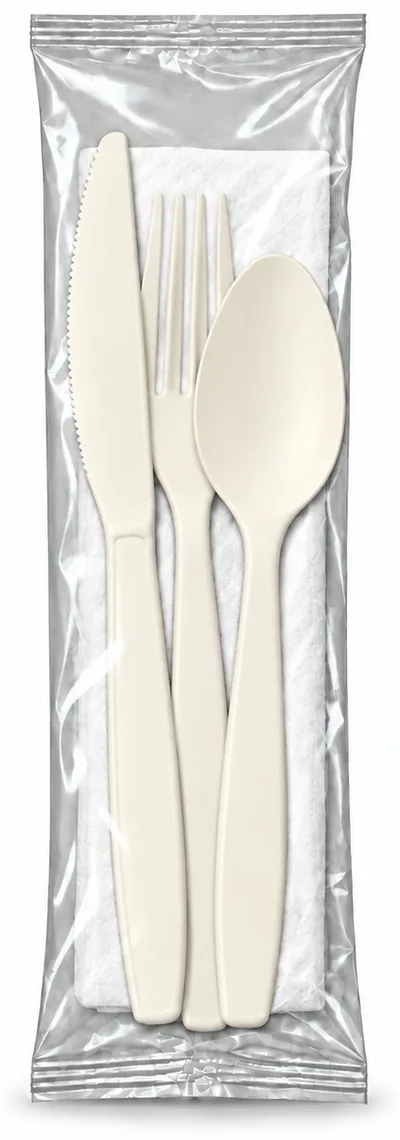
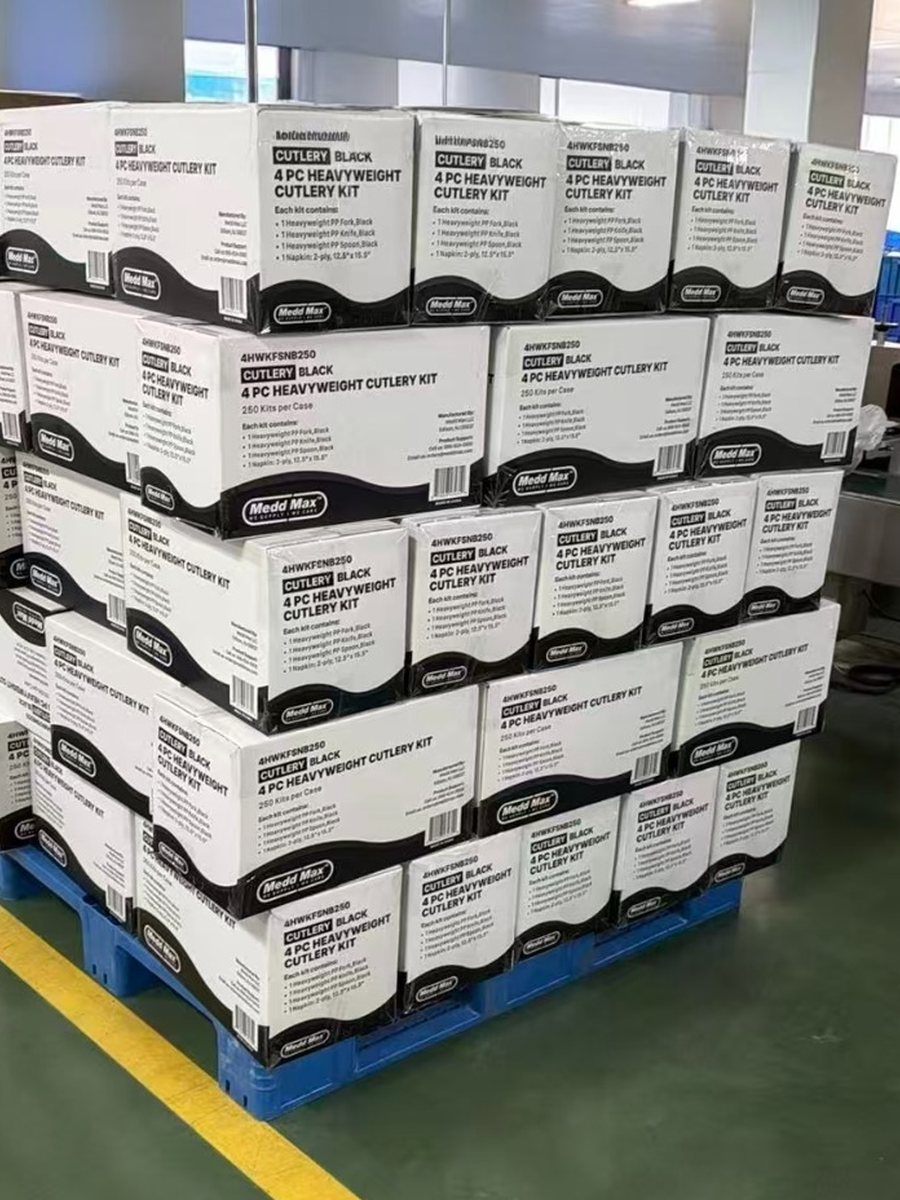
Wrapped, sealed, cased and palletized.
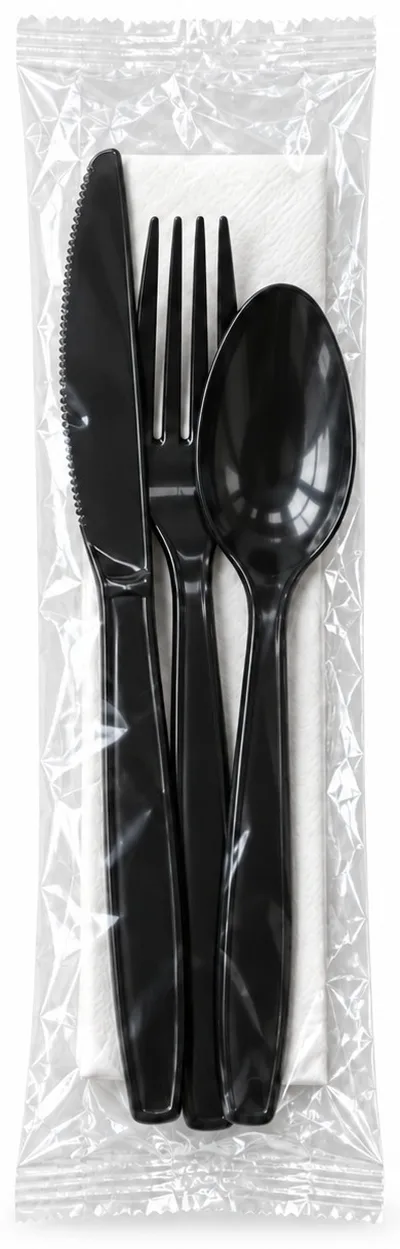
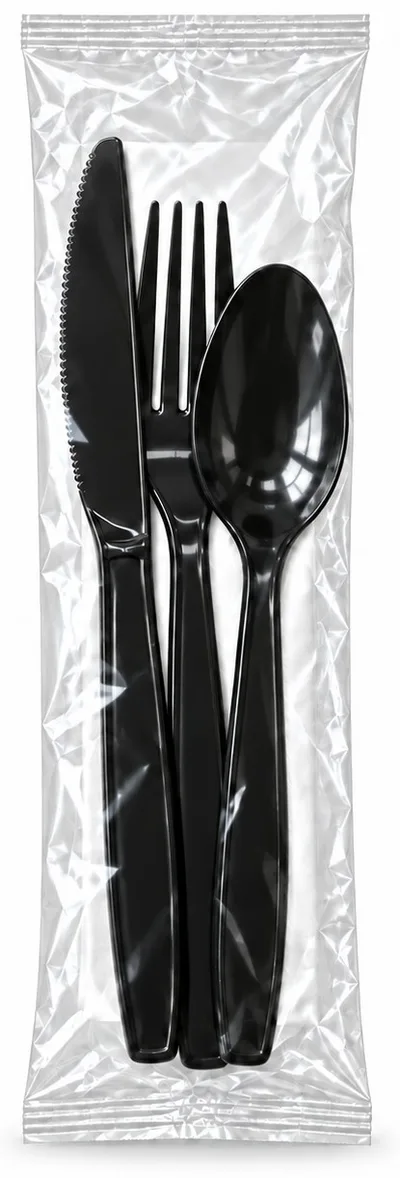
Fifteen seconds on the line: fork, knife, spoon and napkin are fed, flow-wrapped and sealed in one pass, then packed 250 to a case.
Every case is printed with the Medd Max item number, the kit contents and the case count, so receiving can check it against the PO without opening it.
Diet-coded tray kits for hospitals, back in production.
The color-coded diet kits most hospitals and nursing homes ran on came from one plant in Georgia. That plant closed in 2026 and nobody picked the line up. Since then dietary directors have been building sugar-free, low-sodium and regular condiment sets by hand, or buying plain wrapped cutlery with no diet marking and hoping the tray aides get it right.
Medd Max kits use the same color logic those kitchens already know: yellow for sugar free, gray for low sodium, orange for sugar free plus low sodium, blue for regular. Send us the diet kit item numbers you buy today and we return a line-by-line replacement list.
We make all 19 kits ourselves: the four diet-coded condiment pouches, the tray kits with straw and napkin, the meal kits with heavyweight cutlery, and the wrapped cutlery in heavyweight, mediumweight and compostable CPLA. Same customers as before: hospitals, skilled nursing, rehab, senior living, behavioral health and corrections.
Built to drop into a national catalog.
Download the distributor catalog (PDF)
Set up as a new vendor item in one pass.
Good to know.
When are the kits available?
First stock lands December 4, 2026 for the Heavyweight Black Cutlery Kit with Napkin (4HWKFSNB250) and the Heavyweight White Cutlery Kit with Flex Straw (HWKFSFSN500), and December 15, 2026 for the other seventeen. Projections sent now are built into that first run.
Can these replace the diet kits we can no longer get?
Yes. The line covers the same diet codes (sugar free, low sodium, sugar free plus low sodium, regular), the same formats (condiment-only, condiment with straw and napkin, full meal kit with cutlery, wrapped cutlery) and the same 250 and 1,000 case packs the discontinued national lines used. Send your current item numbers for a line-by-line cross-reference.
How do we buy, and what are the minimums?
Directly from Medd Max, which manufactures all 19 kits and ships them from its own warehouse to healthcare foodservice distributors, redistributors and health systems. 25 cases per order, mixed SKUs allowed, Net 30 on approved credit. Pallet and truckload programs available.
Why color-code condiment kits?
Therapeutic diets fail at the tray line, not in the kitchen. A sugar packet on a diabetic tray or a salt packet on a cardiac tray is the most common diet-order error in long-term care, and a printed, color-banded pouch is the fastest check against the tray card.
What is in the salt-free seasoning blend?
Dehydrated onion, garlic, carrot, tomato, citrus and spices, 0.4 g per packet. No salt. It replaces the salt packet in the low-sodium kits that carry it.
Can you private-label or change components?
Yes. Pouch printing, component counts and cutlery weight can all be specified for a distributor program or a health-system standard. Lead time about six weeks by air, three months by sea.